Podcast Excerpt:
It’s about asking for the seat at the table, but it’s also about positioning the value of that. Tying me being involved earlier as to the pain points that the projects are experiencing, so what are the pain points that are happening in your organization that the executives are aware of? What are the organizational objectives that you feel like you could help with by being involved earlier and starting to tell a story about how your work can contribute and solve those problems or achieve those things? So it’s not just, “I need to be involved earlier.” It’s, “I can add this value or make this contribution if I’ve evolved earlier as opposed to being brought in.”
Guest Bio:
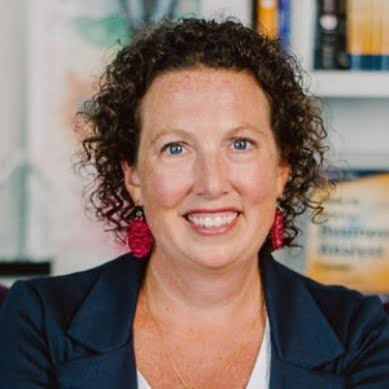
Laura Brandenburg, ACBA, CBAP, internationally-recognized leader known for helping mid-career professionals start and succeed in business analysis careers. She is the founder of Bridging the Gap, the best-selling author of How to Start a Business Analyst Career, and the creator of The Business Analyst Blueprint® framework and training program.
Laura brings nearly 20 years of experience in the business analysis profession, filling several different full-time business analyst positions, as well as contributing as a consultant, hiring manager, trainer, and career coach. She believes that we build our profession one business analyst at a time, and her life purpose is to help others achieve more confidence and live their best life.
Find out more about Laura, her training, and take advantage of tons of free business analysis career resources at her website: http://www.bridging-the-gap.com
Episode Transcript:
Tracie:
Hello everyone and welcome to Traceability podcast. I am your Host, Tracie Edwards. And I cannot tell you how absolutely thrilled I am today to have my friend and career mentor Laura Brandenburg with us. Laura, as you all know, Laura is an ACBA, a CBAP, and an internationally recognized leader known for helping mid-career professionals start and succeed in business analysis careers. She is the Founder of Bridging the Gap, the bestselling author of How to Start a Business Analyst Career, and the creator of the Business Analyst Blueprint Framework and Training Program, which many of you have participated in over the years. Laura brings nearly 20 years of experience in the business analysis profession. She's filled several different full-time analyst positions as well as contributed as a consultant hiring manager, trainer and career coach. And she believes that we build our profession one business analyst at a time, and her life purpose is to help others achieve more confidence and live their best life. Thank you so much, Laura for being here. So happy to have you.Laura:
Thank you so much Tracie and for reading that elaborate bio. So I appreciate you with the opportunity to be here.Tracie:
Well, it's a fantastic bio and as many of us know, you have been there, championing business analysis and upskilling in business analysis for many years, and so that was a terrific bio. How I normally begin the conversation just because I find it interesting and not all of us start out targeting business analysis as careers, and so I wanted to get a taste from you, I don't know if it's something we've ever talked about, but how you got your start in business analysis.Laura:
Yeah. I was in a quality assurance role in a publishing company just a few years out of college. I had started as an assistant editor and that was completely boring, got into technology, in QA and thought like, "Wow, this is fun and exciting and big salary bump." And just kept asking questions. And one day one of the lead, they were called systems analyst, but the systems' analyst was like, "Have you ever thought about applying? We have an open position, do you want to apply for it?" And I was like, "No, no, no, IQA is so busy, I can't possibly leave my team." And I will always remember this moment, because she just looked me straight in the eye and she was probably maybe in her 50s at the time, but she was definitely my senior and she's just like, "It's a great opportunity and it's probably a lot more money. You should really think about it." And so I did and I applied for that position and ended up starting that position. So it was an internal move within the company. I knew the domain, I knew the technology, I understood the business and really in that role realized, "I liked being QA engineer, but this is a lot more fun and I'm on the starting side of the project versus the ending side of the project." It felt more empowered to solve the problem that I was really trying to solve.Tracie:
That's great. And I love how you bring out that it was an internal move. I think a lot of the time we're reluctant to move internally, we're worried about what that's going to do to career paths and such. And so I love that you were willing to consider that internal move and how it worked out for you there.Laura:
Yeah. Thank you.Tracie:
You get into business analysis and then maybe talk about your own career progression in business analysis and how some pivotal moments or decisions that kept you going down the business analysis path.Laura:
Yeah. I think about two years or so after I started that role, I had been the lead business analyst on a pretty significant project and then started some smaller projects. And that same person actually had gotten asked by one of the leaders who'd left the company for this job, I was in Michigan at the time for this job over in California, and she didn't want to leave her daughter or make that move and she recommended me for that position. And so it was a huge opportunity, I uprooted my whole life, but I was young and single. It was just a perfect time to do something like that. But from a business analysis perspective, it put me into work in a new technology stack, completely new set of stakeholders, different business environment, and I thought I was a good business analyst, but then when you switch domains, you realize, one, how much your core skills needs showing up, because you're not relying on all these areas of expertise, but then also how strong you can be in new environment. So I really think that role stretched my skillset a lot. And I ended up moving again, that company had a rocky period for a year and a half, two years, that I ended up moving again to Colorado to a startup that was acquiring companies. And there is when I was the first VA, there was no test team, no development team. There was just a few of us starting to put some structure into place. And that position ended up over the course the next couple of years, growing into a 15 person team of managing project managers, business analysts and testers, which was never anything I saw myself doing, leading a team like that. I got not so gently pushed into it, but it ended up being really a huge growth opportunity just to see what it took and to have that kind of team around me and to hire those people and build that team from the ground up was in a lot of ways very fun, stressful, and fun.Tracie:
Well, and what I really caught onto there as you were talking was the importance of having a mentor for you personally, someone who was really in your corner pushing you along when maybe you weren't expecting to be pushed along and such.Laura:
For sure. I've had both the leader who moved me between those two companies and the woman who originally encouraged me, were both great mentors to me. And probably the woman more so than the leader. He was more just like, "You're going to do it, you're going to be fine. It's going to be fine. You'll be fine." But he was a great advocate for me in terms of showing me how to stretch myself and he saw more that was possible for me than I saw for myself. And so I stepped into that versus having to push for that, which is a really huge gift and a really rare opportunity, I think.Tracie:
Yeah, I agree. And I think we've talked about this a little bit, but maybe just to revisit, really what's a good approach for finding a mentor? If we're feeling like we're not getting the mentoring that we need, what's probably a good approach for finding those mentors and those people who are willing to guide us and help us stretch?Laura:
I feel like I stumbled into those, but I'm sure, I always say that, but there was something I was doing. I was also agreeing to take on new tasks. So part of my story getting into QA was, I volunteered to do this data testing that nobody else wanted to do. And I was like, "But I don't know how to do it." And the woman who always got stuck doing it was like, "I will take an hour and show you how to do it so that I never have to do it again." So sometimes it came from just being willing or interested in doing the work that other people were ready to let go of because then those were the people who became my mentors. That is a bit of a theme. So just jumping in and saying, "I'm happy to do it, but I need help and this is the kind of support I need." So just reaching out and talking to people and finding the people who are interested in helping grow people. And it doesn't have to be a super formal relationship, most of these were not formal ongoing relationships, the support came as a byproduct of the projects that I was working on, I suppose is what I'm trying to say.Tracie:
That's awesome. You and I have both been business analysts for, gosh, really the advent of all of the internet era type of work and that kind of thing. And so I think having that willingness to jump in into an unknown world probably speaks volumes to mentors and potential mentors. So I think you bring up a great point as far as maybe you're not sure you have an aptitude, but you at least have some desire to do something and to contribute. And it almost sounds like putting yourself forward a little bit because not only were you looking for mentors, but you're advocating for yourself as well, it sounds like.Laura:
Yeah. Part of that, even in the leadership, the role that evolved into a management leadership position was just seeing the lack of business analysis, the lack of testing, the lack of any project management and just, "This is a problem we have to solve. How can we function like this as we're growing?" And just seeing that and then, "How can I create a difference? How can we create a structure? What's the next possible step that we can put into place?" We didn't start with a 15-person team that evolved over the course of a few years and it was, "What's the next role that we need because we're trying to accomplish this? And how can that role at value in this way?" And that just kept stretching me as the project work and the organizational work expanded.Tracie:
I think I've shared with you one of my pet peeves or challenges is often that the business analyst is brought in not at the very, very beginning and that can be a frustration for us. And in addition to being willing to take on those extra responsibilities and advocating for ourselves, what might you recommend as far as making sure that we're engaged more towards the beginning instead of after all the planning has already been done?Laura:
Yeah. It really depends on where you are at in your career. So the advice that I would give to somebody like you who's very advanced and experienced in their career is different from somebody newer. So somebody newer I think does need to prove themselves within the role that they're assigned first. So I see this, and I always like to point this out as a challenge because some BAs can learn the theory and then go into an organization that does not deploy most of those BA practices. And then they're seen as just the, "We're not doing it right, we're not doing it right. We have to be assigned..." And so that does create the kind of change that you're looking for. So I think you often need to go in and establish yourself first and build that credibility as you become known as somebody who does get things done. It's about asking for the seat at the table, but it's also about positioning the value of that. Tying me being involved earlier as to the pain points that the projects are experiencing, so what are the pain points that are happening in your organization that the executives are aware of? What are the organizational objectives that you feel like you could help with by being involved earlier and starting to tell a story about how your work can contribute and solve those problems or achieve those things? So it's not just, "I need to be involved earlier." It's, "I can add this value or make this contribution if I've evolved earlier as opposed to being brought in." Is when all the big decisions have been made. It's so important to have that credibility, whether you're bringing it with you from a decade of experience or building it within that organization. Sometimes you just have to, [inaudible 00:12:26], from the beginning and it's not easy, but it's essential in those early stages.Tracie:
Yeah, I agree. And I think actually what you're advocating for is sales and marketing.Laura:
Yes, it is.Tracie:
A little bit, right?Laura:
Yeah.Tracie:
I think a lot of us come up thinking, "Oh, I don't want to have anything to do with sales. Sales puts me off a little bit." But really positioning ourselves as experts that is more about sales and marketing, I think.Laura:
If you take a positive view of sales, not the sleazy used car sales of your skills, ideally sales is, how do we help someone receive value from whatever we have that we can offer them? And great sales is some sort of a consultative selling process, which really can be business analysis, understanding somebody's needs, understanding their problems, understanding how what you have to offer fits those needs and explaining that in a lot of detail and willing to have those conversations. Most sales people are great at this when it's not the right solution, [inaudible 00:13:34], "We understand your problem and we're not the right solution." So that to me is great sales and it is, it's really good business analysis too.Tracie:
Yeah, I love that. So here you are, you're working in a business analysis leadership role, you're leading people and at some point you decide, "You know what? I think I'd like to try doing my own thing." What was that like for you? What led up to that?Laura:
Yeah. That was not the first thought. So what had happened is, in that leadership role, over the course of a few years, we had two leadership changes. So the person that had been my mentor, an advocate moved to a different role in the company and we hired a CTO, which was not a great fit for me, but was manageable. And then he was let go and hired another CIO who created a very toxic environment and became very blame driven, super aggressive deadlines to the point where there was this day I caught myself lying to cover for a team member on the phone and I was like, "I can't do this anymore. I'm done." And so I left that position with no plan. No plan. And then took the summer to decompress and figure out what did I want to do with my life and started blogging and writing about business analysis, thinking I wanted to be a contractor or consultant and did some contracting. Didn't have as much luck on the consulting side, but did do some contracting as a business analyst. And over time what Bridging the Gap is today has just emerged out of what was me just trying to share what I was doing to help others that also just... Really to get contracts was my goal at the beginning.Tracie:
And you found your way as you went along and you expanded into things as you went along?Laura:
Well, what happened is, I was writing thinking I would find consulting clients, but who was reading my stuff was other business analysts or people who wanted to start business analysts careers. And I kept getting that question like, "How do I get into the profession? How do I get started as a BA?" So that's when I authored that book, How to Start a Business Analyst Career, "Okay. I'll solve this problem for everyone." And I interviewed a bunch of people about how they got started, heard many stories, like I'm sure you've heard. And distilled down my own experience and those experiences into a guidebook and that people were still, "How do I build the skill?" The training out there isn't quite what I would recommend. There's a lot of better options out there today than there were 16 years ago when we started. But then it was very abstract, very formalized. It was major college degree programs versus the hands-on training that I thought people needed. And so I just started offering training and now today I, [inaudible 00:16:27], as a training company with a blog, not a blog that happens to be some training. But somewhere along the way that shift happened.Tracie:
You were really speaking about thought leadership, sharing your knowledge in a way that seemed to make sense for where you thought you were going. But as you developed that thought leadership, it gave you even more opportunity to maybe reframe and take Bridging the Gap in a different direction?Laura:
For sure. And it was not like I sat down one day and mapped this all out. It was very much incremental and pivoting along the way.Tracie:
I know that feeling. So as we speak about, gosh, from the early 2000s till now, there's been quite an evolution of expectations of business analysts, of opportunities to maybe tailor yourself to specific domains or specific types of things like data or product owner and that kind of thing. So really, how have you seen business analysis evolve over the years and what does that look like for business analysts becoming leaders or thought leaders?Laura:
Yeah. I do really think there's always been an element of leadership in business analysis because you've always been in a position where you're creating change and you can't create change unless you are leading in some way. It's never been a position like a top-down leadership position and often still is not, but you're in this process of helping the change unfold without a lot of authority, which requires a lot of leadership just to manage competing interests and priorities and feasibility and all the things that go to any project. But the role has certainly become a lot more complex, the number of systems. I think it's rare these days that we're on a project that's just touching one system. Often at least that data is fed somewhere for something and you need to think about all those system impacts as well as the business process impacts and just looking at that big holistic picture. And so that's, I think one of the biggest ways. Some of my early projects, we were building products, and even then I was always thinking about the back end support and the pieces, but there was a confinement to it. You were building this thing to deliver this product and in this way, and which we're done, you were done. And today, I think these systems just interweave and blend and everything affects each other. So you really have to have a much broader understanding.Tracie:
Yeah, I agree. The whole concept of services any more, APIs and all sorts of connecting things and not necessarily real standalone systems anymore as it used to be. So I like that as far as making yourself knowledgeable from a holistic perspective.Laura:
Right. And being able to see all those interconnections and interdependencies.Tracie:
Speaking of leadership, what do you think are some important skills that we need to gain to be seen as leaders? One of them you mentioned was about influencing without authority and understanding the big picture of products and services and that, but what may be some others?Laura:
I think being able to think strategically and see the big picture, but also communicate that big picture without all the complexity. So it's this role of, I see all the complexity, I understand the complexity, but I could also draw a visual picture that can explain it. I can explain it to an executive or somebody at a level that doesn't want all the details without boring them. So that impactful communication that gets your point across, that strategic view without all the details, which is really, really hard to do. I think there's, [inaudible 00:20:34], in that. Also, just being proactive as opposed to reactive. So looking at, "What are the problems our projects are facing or what are the problems our business is facing and how can I be part of the solution?" Versus waiting for something to go wrong and reacting to that or waiting to be assigned something and taking on that task and then being upset and it's like it's not the right role. So just that, having an approach, having those relationships in place to see those problems and to then start contributing and taking ownership of resolving some of those things and moving the organization forward.Tracie:
Backing up just a little bit, you alluded to audience as you were speaking of, sometimes we're sharing with executives, sometimes we're sharing with business leaders, and understanding who our audience is at any given time is definitely important.Laura:
And not just the executive, but also those end users. And their perspectives are so different, and so I think it's equally important to be able to be empathetic with an end user who's been doing the job that they've been doing the same way for several years at times and is facing this huge change that they have really no authority over, and sometimes being their advocate when it makes sense, and sometimes helping them change when it makes sense and bringing some awareness of those perspectives across the organization.Tracie:
Do you have any recommendations for dealing with a resistance in some of those change situations?Laura:
From the end users?Tracie:
Well, it could be from anybody really.Laura:
Yeah.Tracie:
Could be, "Hey leader, this change, I don't think you understand what the impact is going to be." Versus, "Hey, end user, there's a new world out there, we need to go towards it." So not just with understanding the audience, but maybe speak to how you could overcome some resistance from different, [inaudible 00:22:40].Laura:
Yeah. Well, I think the understanding their perspective is always the first step. Because when we go in with a story or a pronouncement, most BAs don't do this, but you might be trying to fulfill a pronouncement from the top down or from the top out, however, but just understanding their perspective is the first step so that you can then think of how will this actually benefit this person? So an example, one of the contracts I worked on, we had a very resistant stakeholder group, and me and the project manager flew there and had a couple of days of meetings to understand their pain points, their issues with the current system. And the executives had an agenda to put it all online and get rid of all the paper and all the things that executives want to do with digital transformation. And the people were like, "But we need this because..." Well, we got them talking about what's their frustrations with the current process. I will always remember how this project manager just subtly expanded the scope to include a few of those things where they're very hot points and all of a sudden they had a reason to be at board, because even though they weren't thriving the whole agenda of the project, they felt heard and they had a few of their things that they really did care about incorporated, and so we could go back and really talk about those things and the positive change that they felt were going to happen and that helped them get on board with all the rest of it as well.Tracie:
That's a great tip and I think an often overlooked one as we're doing projects and deploying new things, really obtaining buy-in through the, "Hey, what's frustrating you? And what might this project help you so that you're less frustrated?"Laura:
Yeah.Tracie:
Well, as you know, and as most of us know, LinkedIn and having powerful connections or powerful network of connections is so important today. Do you have some tips for developing a strong professional network? I think what I see is some folks are a little reluctant, especially in the age of social media and also you end your job at the end of a day and you think, "I do not want to go on a webinar right now." Or something like that. So maybe can we talk about just, how do we build that network and how do we engage so that we have that network and can keep that career security going?Laura:
Yeah. Part of what I was going to say is, to not over look the network within your organization, which could be a part of the job that you're doing anyway. So networking doesn't have to be an after the job activity, how can you build it into your day-to-day work and within your organization? Obviously every company has its own policies and standards, but I remember times when I was searching for things because I needed that piece of information to do my job. There's some networking that logically fits within the context of your role. If you're looking for how to baseline against people in your industry or other ways that people are handling similar challenges or how to use a tool like Jira or Lucid or the visual modeling tools, you might use those things, you could go through a training or you could tap into your network and ask a question. So just thinking of pieces of it is also part of your work day as much as your policies allow. And one of the things, I love Susan Moore of IIBA talks about, the IIBA community. I'm assuming your listeners probably... International Institute of Business Analysis and how we feel like we have to build a community, but really you can also just join one. So looking for the communities that already exist where you can essentially buy into or join one and meet people like that versus feeling like you have build it all from scratch. Our training programs today, you were a part of our community at one point, but now we have that community built around the Business Analyst Blueprint because I think it's just so important that people have an opportunity to connect with other people outside of their organization and see how business analysis is done outside of their organization as well. And to me, it serves the employer because your employee is getting that broad perspective and it serves the employee because they're both building their network and bringing more value back to their employer as well.Tracie:
Yeah. I love how you position that as community. I think that's going to be a big takeaway for me today is, we're in this together, we're a community, we're here to share with each other and learn from each other. And the concept of community is a little different than the, "Oh, hey, I have to go network."Laura:
Right. Well, I think network feels like I'm trying to get something like, "Oh, I might at least hear like, 'Oh, feed the well before you're thirsty or build the well before...'" Which are great concepts, a 100% agree with that, build your network before you need the job. And because when you're in the job search mode, you tend to be in this a bit of a scarcity mindset, and then you are networking in order to get a position or get a referral. And so it does feel like a getting at, [inaudible 00:28:03], versus, "I'm making connections because I'm really passionate about what I do and I'm excited about shared interests and building those connections with people." The BA community is really inviting and generous and sharing as well. So there's very few BAs I've met who aren't willing to share something.Tracie:
Well, I hope you don't mind if I gush about the Circle of Success a little bit. I was part of the Circle of Success for a couple of years, and that was such a great community builder for me. I am still in touch with several of the folks that we met in the Circle of Success, definitely you and Paula, but also some other folks from around the world. And so I thought it was interesting as we desire to be successful, a lot of that success looks like that community.Laura:
Yeah. That was a really fun community to build. And things have taken a slightly different shape in the current version, but it's still a lot of fun to see people. And I always encourage, at the end of a workshop or any way that people interact, leave your LinkedIn profile, send connection requests to the people who are on this session. You just never know who you're going to connect with and who you might want to connect with in the future. So you're always building just those connections, [inaudible 00:29:30].Tracie:
Yeah. So big plug for community building and looking to involve yourself with many people, it's a great way to grow your thought leadership and a great way to feel support and feel like you have people in your corner. So speaking of success, how do you think we measure the success of business analysis? I've worked in some organizations who say they don't know how to measure business analysis and what makes a business analysis valuable and that kind of thing. So any thoughts on success, [inaudible 00:30:10].Laura:
I will say I empathize with that, and I always found when I was leading testing and project in BA like, "Project, are we on time and on schedule?" QA, "Are there defects or did we get defects in the production? Business analysis, it's hard. It's really hard, partly because our role is so interdependent that when we say measure, we often mean measure and critique, measure and judge. So part of what we do is so interdependent that it's hard to be accountable to those metrics. I think at the project level though, if we can hold ourselves to unnecessary change and unnecessary rework, I think those are really great metrics to be thinking about like, "How can I make sure I'm creating that alignment and clarity before implementation begins?" Definitely not to eliminate collaboration or agile practices, but just not to rework for the sake of rework. But one thing I'm really thinking about, I recently read Angela, Wicks and Tim Coventry's Futureproof book, and I don't know that they came out and said it this way, but when I was thinking about this question, they were demonstrating the business analyst was essentially accountable to the business outcomes. So maybe we don't need business analysis metrics, maybe we just need to know, "What are the business objectives and the business outcomes?" And those are what we're measuring ourselves towards. And I think you talked about services, I think I've seen a lot of work around product and value stream reorganizing in these streams outside of maybe a specific project, but it's really because we want people looking at that full picture of, "Are we actually in improving on a specific measure that's important to the company?" And as BAs, that's how we take the next level of leadership, is just to own some of those business measures.Tracie:
Well, I love that. I think sometimes it's hard for us to think in outcomes because we're used to being a little granular and how does that granularity translate into something that moves the needle, [inaudible 00:32:15]? But I like that as far as outcomes and how you contribute to, [inaudible 00:32:20].Laura:
Right. And it really does mean that business analysis goes beyond the project. Because the project delivers some sort of solution, but the metric really doesn't change until that solution is used by the business and maybe tweaked over time. And there's more to it than that first iteration of whatever you deliver on a project.Tracie:
I think that's really powerful. Thank you. What's maybe the most valuable lesson you've learned as a business analyst or thought leader?Laura:
I think just building on what we shared is just the willingness to take ownership. And that really applies to everything, your skills, your projects, your career, the business outcomes, if you feel like you're ready for that. But the more you can take ownership for, the more responsibility that you'll have if you want that, but the more growth you set yourself up for. And so it means not creating this external, "Oh, that's not my fault because..." Or, "That's not my responsibility because..." But, "How can I contribute to the solution for that?" But every time I've done that, it's been hard and then more opportunity comes. People who take ownership are the people who move up and who have more opportunities available to them.Tracie:
It reminds me of experiences in my career where the executives or the managers, leaders, if you can show them that, hey, you're willing to make a decision, you're willing to go to the bat for a particular solution, it really works wonders for your reputation in the organization.Laura:
Yeah. One other thing I would add to this is, along with the ownership is also clear boundaries though. You can't take responsibility for everything about the culture, which I think there are times early in my career, especially when I was in bad situations, I felt like that was all my responsibility. It almost led to a feeling of implosion. So having better boundaries and like, "Actually that's not my thing and that's not my fault, and that's not mine to fix," is also important to have both.Tracie:
Yeah, I agree. Boundaries. We don't want to kill ourselves off taking on too much of a load or I guess maybe being pushovers or something because we still have to have some strength there to have some of that demarcation.Laura:
Yeah. Be very intentional about it. If I could go back to myself in my 20s, it'd be like, "Be a little more intentional about what you take ownership of."Tracie:
What does that look like for you as a business owner? Giving yourself that, "Okay, this is where the boundary is. And this is where, [inaudible 00:35:06]."?Laura:
I struggled with this in training for a long time because training, I always want every one of my participants to go through every training module, upload their stuff, let me review it, show up every time, live and ask a question. And I would feel responsible in the early days when somebody you bought at training and didn't participate or however that unfolded or dropped off at some point because project work got in the way or whatever. And so it has been an evolution for me and Paula, who you know helped me a lot with that of, "Actually, here's the piece I can control. I can check in with you, I can send you follow-ups, I can do this part. I can make sure our training is the best it can be, all these things. But I can't actually do your work for you. I can't feed you the information." And so just owning that and being okay. Sometimes people will still go through and that they'll have a reaction, it's like, "Oh, actually that's not about the program. That's about your experience." And then, or, "Oh, there is actually something we could have done to improve the experience, this is our piece of that." And just being more clear and intentional about that. But it's been a journey for sure.Tracie:
Yes, I can imagine. So as we begin to wrap up, what is coming up next for you? You're in the middle of the ACBA program and what's coming up next?Laura:
I am working on my next book.Tracie:
Yay.Laura:
I know. I'm so excited. I am writing every day, and it's probably three quarters through the first rough draft, which, that means there's still a lot to go, but I'm really excited. And that book is going to be about really how to take your BA skillset to advance your career and how to do some of the work we do with business analysts and overcome a lot of the resistance and challenges. But how to do that in a value-focused way, so that you're also overcoming a lot of the hurdles that we face along the way while growing your career as you do it.Tracie:
Well, I really look forward to that.Laura:
Thank you.Tracie:
You must let me know once it's published so that I can get the word out.Laura:
Will do. Yeah.Tracie:
And then do you have any questions for me before we sign off?Laura:
Oh, I wish I knew you were going to ask me that.Tracie:
I like to spring it on people.Laura:
Yes. We had a moment in the Circle of Success when you took a big leap, and I'll let you share what you want to about this, when you look back at that moment now, how do you think about that leap?Tracie:
Well, it was interesting as it all played out because I had maybe thoughts that my life was going in a different direction. And that the opportunity that had been there had passed, and so I was moving on. But with guidance from you and from Paula and like, "Hey, this is going to be a good thing for you. This gives you some possibilities and don't say no yet, really give it some good thought." And it ended up being a terrific decision, one that I was super grateful for at the time, and it worked out several years later in a way that I wasn't expecting. But in both of those situations, it gave me some opportunity to expand my horizons and do some different things and eventually going into more education and Traceability. And I think traceability would not have happened without the Circle of Success, because so many things were happening in my mind at the time Circle of Success was going on, and as I was considering, "Hey, what about this podcasting thing?" And you and everyone in the Circle of Success we're so positive and encouraging of that. And here we are, still going a few years later. So very grateful for that for sure.Laura:
Well, congratulations. You're doing so many great things in the world and you continue to get new degrees and I think you're just pushing the envelope in so many ways. So it's an honor that we got to be together for, [inaudible 00:39:38], of your career.Tracie:
For me as well. And on that note, we'll go ahead and wrap up today. I know it's a little late where you are, so I just can't thank you enough for being here and, [inaudible 00:39:53].Laura:
No problem at all.Tracie:
Thank you-Laura:
Thank you so much, Tracie.Tracie:
... so much.Meet your hosts:

Tracie Edwards
Host